
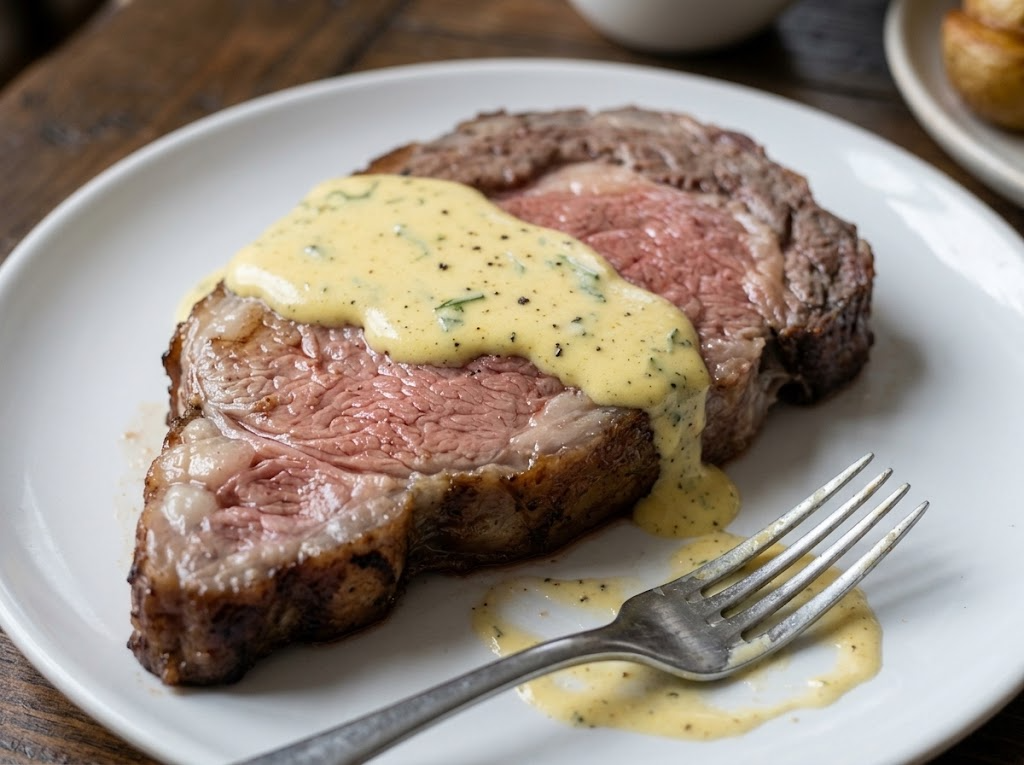
This classic béarnaise is a rich, silky French sauce with a gentle tarragon kick, a hint of shallot, and a buttery finish that turns steak, salmon, or asparagus into something special. The texture should be smooth and spoonable, like warm mayonnaise, with a clean tang from the vinegar reduction. It’s a medium-difficulty sauce that rewards a little focus and gentle heat. Total time is about 25 minutes, and once you’ve made it once, it becomes far less intimidating.

Ingredients
For the tarragon reduction
- 2 tbsp white wine vinegar
- 2 tbsp dry white wine (or water)
- 1 small shallot, very finely chopped
- 2 tbsp tarragon leaves (or 1 tbsp dried tarragon)
- 6 black peppercorns, lightly crushed
For the sauce
- 200g unsalted butter
- 3 large egg yolks
- 1 tbsp cold water
To finish
- 1–2 tsp lemon juice, to taste
- Pinch of salt, to taste
- Pinch of cayenne pepper (optional)
- 1 tbsp fresh tarragon, finely chopped (for a fresher finish)
How to Make Mary Berry Béarnaise Sauce Recipe
- Prepare the oven: This sauce doesn’t need the oven, but it helps to warm your serving jug and plates. Set the oven to its lowest setting (about 80–100°C) and pop the jug in for a few minutes, then turn the oven off.
- Prepare the equipment: Set up a small saucepan with 2–3cm of water and bring it to a very gentle simmer. You want steam, not a rolling boil. Find a heatproof bowl that sits over the pan without touching the water.
- Melt the butter: Melt the butter in a small pan over low heat. For a more stable béarnaise, skim off the white milk solids from the top and pour the clear yellow butter into a jug, leaving any milky residue behind. Keep the butter warm, not hot.
- Make the tarragon reduction: Add the vinegar, wine, shallot, tarragon, and crushed peppercorns to a small saucepan. Simmer until reduced right down to about 1 tablespoon of liquid. Strain into a small bowl and let it cool for 2 minutes so it doesn’t shock the yolks.
- Mix the yolks: Put the egg yolks into your heatproof bowl. Add the strained reduction and the cold water, then whisk until combined.
- Bake (gentle cooking over steam): Set the bowl over the barely simmering pan and whisk constantly for 3–5 minutes, until the mixture is pale, slightly thickened, and leaves soft ribbons when you lift the whisk. If it starts to look grainy, lift it off the heat immediately and whisk off the heat for a moment.
- Emulsify the butter: Take the bowl off the heat. While whisking all the time, add the warm butter in a very thin stream at first. Once it starts to look glossy and stable, you can pour a little faster. Keep whisking until thick, smooth, and spoonable.
- Cool (and hold warm): Béarnaise shouldn’t be cooled fully, but it can sit for 10–15 minutes in a warm spot. If it thickens too much, whisk in a teaspoon of warm water to loosen. Keep it away from direct heat so it doesn’t split.
- Assemble and serve: Season with lemon juice, salt, and cayenne if using. Stir in chopped fresh tarragon and serve straight away over steak, fish, or vegetables.
Tips
Why did my béarnaise split?
This usually happens from heat that’s too high or butter that’s added too quickly. Take the bowl off the pan and whisk briskly to cool it slightly. To rescue it, whisk 1 tablespoon warm water in a clean bowl, then slowly whisk the split sauce into it a spoonful at a time.
How do I stop the egg yolks from scrambling?
Keep the water at a bare simmer and make sure the bowl doesn’t touch the water. Whisk constantly, and if you feel the bowl getting too hot, lift it off the pan for 10 seconds and keep whisking.
What’s the best butter temperature for béarnaise?
Warm and pourable is ideal. If it’s hot, it can break the emulsion; if it’s too cool, the sauce can turn thick and greasy. Low heat and patience make a noticeable difference.
My sauce is too thick. How can I loosen it?
Whisk in warm water 1 teaspoon at a time until it’s back to a soft, spoonable consistency. Lemon juice can also loosen it slightly, but add it for flavour rather than texture.
Serving Suggestions
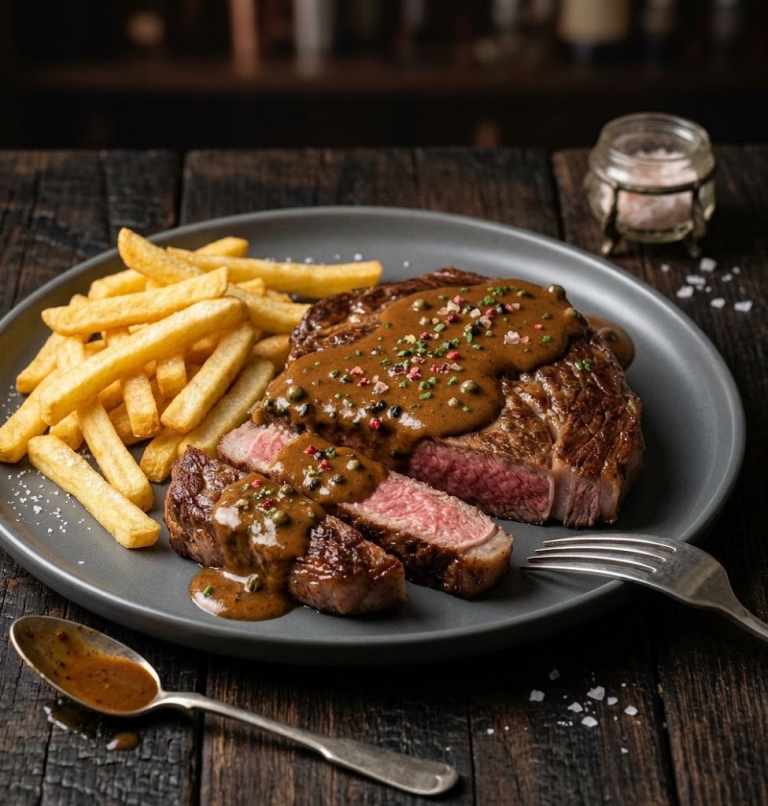
- Spoon over steak frites or a peppery grilled ribeye
- Serve with salmon, cod, or roasted halibut
- Drizzle over asparagus, tenderstem broccoli, or artichokes
- Use instead of hollandaise for eggs Benedict
Storage
Room Temperature
Keep béarnaise warm, not hot, and aim to serve it within 1 hour. For food safety, don’t leave egg-based sauces sitting out for long periods.
Refrigerator
Technically you can refrigerate it for up to 24 hours in a sealed container, but it will thicken and may split when reheated. Rewarm very gently over a bowl of warm water and whisk in a teaspoon of warm water to bring it back.
Freezing
Béarnaise does not freeze well. The emulsion often breaks and the texture turns grainy, so I don’t recommend it.
Nutrition
- Calories: 260 kcal
- Carbohydrates: 1 g
- Protein: 3 g
- Fat: 28 g
- Saturated Fat: 17 g
- Sodium: 70 mg
Nutrition values are estimates and will vary depending on brands, butter yield, and portion size.
FAQs
Can I make béarnaise sauce without wine?
Yes. Replace the white wine with the same amount of water or a little extra vinegar plus water. The key is the reduction, so you still want it to simmer down until very concentrated.
What can I use instead of tarragon in béarnaise?
Tarragon is the signature flavour, but if you’re stuck, try a mix of chervil and parsley, or a small pinch of dried tarragon plus fresh parsley at the end. It won’t be quite the same, but it will still be delicious.
Can I make béarnaise in a blender?
You can, but it’s easier to split if the butter is too hot. Blend the yolks with the reduction, then drizzle in warm (not hot) butter very slowly. Finish with lemon and chopped tarragon.
How do I fix béarnaise sauce if it splits?
Whisk 1 tablespoon warm water in a clean bowl, then slowly whisk the split sauce into it a spoonful at a time until it comes back together. If it’s badly split, start again with 1 fresh yolk and whisk the split sauce into that.
Can I make béarnaise ahead of time?
It’s best freshly made, but you can make it 30–45 minutes ahead and hold it warm in a thermos or a very gentle warm-water bath. Don’t keep it on direct heat, and whisk in a teaspoon of warm water if it thickens.

Mary Berry Béarnaise Sauce Recipe
Course: SauceCuisine: French, BritishDifficulty: Medium8
servings10
minutes15
minutes25
minutes260
kcal25
minutesA silky, buttery béarnaise made with a tarragon-shallot reduction and gently cooked egg yolks, finished with lemon and fresh tarragon. Perfect with steak, fish, eggs, and spring vegetables.
Ingredients
2 tbsp white wine vinegar
2 tbsp dry white wine (or water)
1 small shallot, finely chopped
2 tbsp tarragon leaves (or 1 tbsp dried), plus extra to finish
6 black peppercorns, lightly crushed
200g unsalted butter
3 large egg yolks
1 tbsp cold water
1–2 tsp lemon juice, to taste
Pinch of salt, to taste
Pinch of cayenne pepper (optional)
Directions
- Gently melt the butter and keep it warm. If you’d like a more stable sauce, skim off the white milk solids to clarify.
- Simmer the vinegar, wine, shallot, tarragon and peppercorns until reduced to about 1 tablespoon. Strain and cool for 2 minutes.
- Whisk egg yolks with the strained reduction and cold water in a heatproof bowl set over barely simmering water until thick and pale.
- Remove from the heat and slowly whisk in the warm butter in a thin stream until glossy and emulsified.
- Season with lemon juice, salt, and cayenne if using. Stir through chopped fresh tarragon and serve warm.
Notes
- Keep the heat low. If the bowl gets too hot, the yolks can scramble and the sauce may split.
- If it starts to thicken too much, whisk in 1 teaspoon warm water to loosen.
- If it splits, whisk 1 tablespoon warm water in a clean bowl and slowly whisk the split sauce into it to bring it back.